

Pilates for Every Age and Level Benefits for a Lifetime of Strength and Wellness
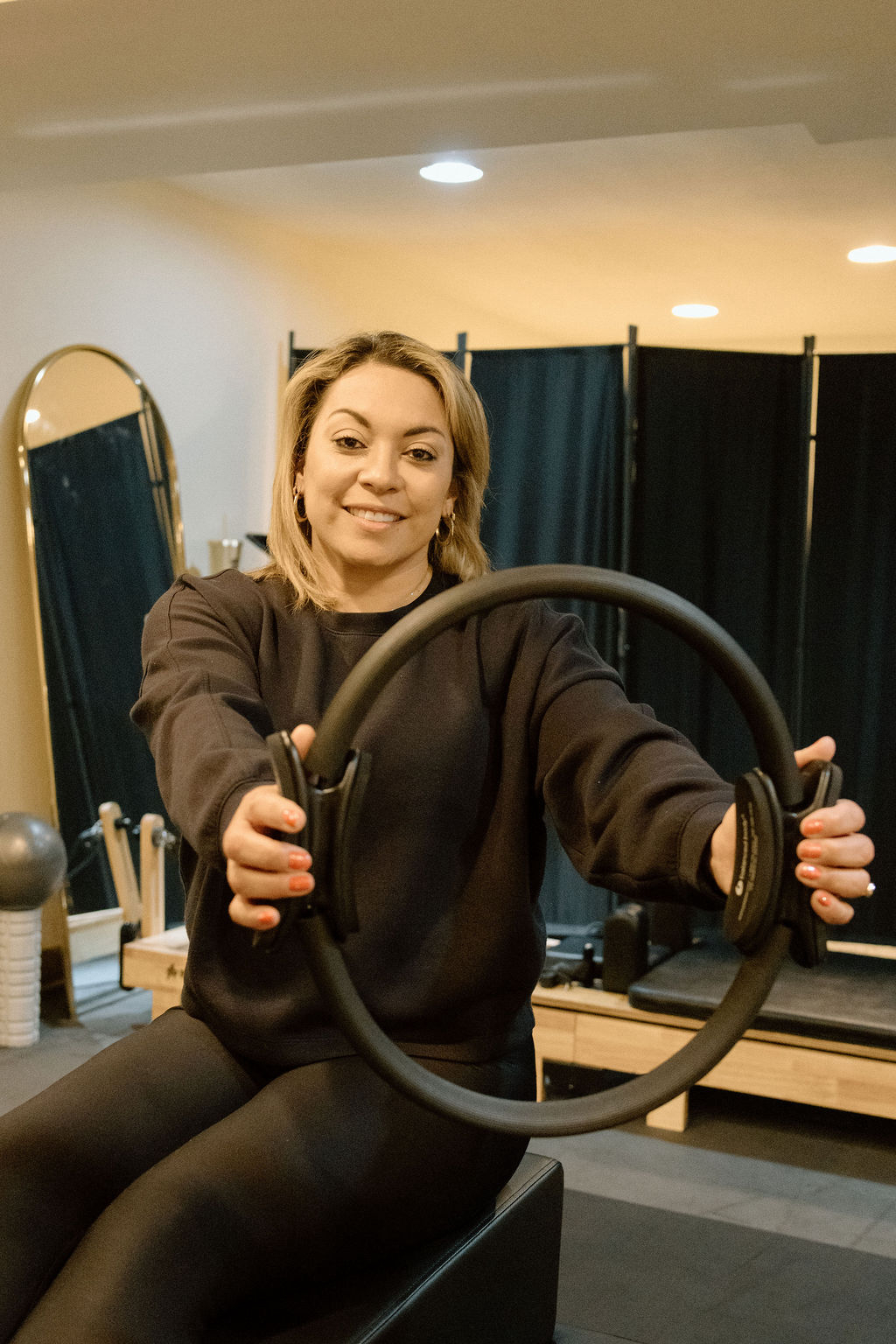
Pilates has a rare quality: it can challenge a seasoned athlete, support someone returning from injury, help a teen build body awareness, and give an older adult a safer path to strength and mobility. The same method can meet people at very different points in life because it is built on control, breath, alignment, and gradual progress.
That is why Pilates has lasted. It does not ask every body to move the same way. It teaches each body to move better.
“And let us run with perseverance the race marked out for us, fixing our eyes on Jesus, the pioneer and perfecter of faith.” - Hebrews 12:1-2 (NIV)
Why Pilates Has Endured
At its best, Pilates supports strength without strain, flexibility without forcing, and confidence without comparison. A beginner can start with simple mat exercises. A more experienced student can add resistance, balance work, and complex movement patterns. Someone in their 70s can train posture and stability. Someone in their 20s can build power and coordination.
This article is informational only and is not medical advice. Anyone with pain, injury, pregnancy-related concerns, or a health condition should check with a qualified health professional before starting or changing an exercise routine.

Pilates meets the body where it is
One reason Pilates works across ages and levels is that it is highly adaptable. Exercises can be made smaller, slower, lighter, or more supported. They can also become more complex, stronger, faster, or less stable as a person progresses.
A single movement, such as a bridge, can serve many goals.
For a beginner, a bridge may teach breath, pelvic control, and gentle spine movement. For someone with more experience, it can become a hamstring and glute strength exercise. On the reformer, it can include footwork, spring resistance, and balance. For an older adult, it may help maintain hip strength and ease getting up from a chair.
The method also values precision over speed. That matters because people often assume harder exercise means more force or more sweat. Pilates takes a different path. It builds skill first.
A good class often focuses on:
Breath Coordinating breath with movement can reduce unnecessary tension and support better control.
Core strength Pilates trains the deep muscles around the trunk, hips, pelvis, and spine.
Mobility Movements encourage joints to move through a useful and comfortable range.
Posture Pilates can improve awareness of how the head, ribs, pelvis, and limbs relate to one another.
Balance and coordination Many exercises train the body to stabilize while moving.
That mix makes Pilates useful for a wide range of people, not only those who are already flexible or fit.
Pilates benefits in the 20s and 30s
The 20s and 30s are often busy years. Long workdays, study, travel, new parenthood, athletic goals, and changing routines can all affect the body. Pilates can be a steady practice that builds a strong foundation before aches and imbalances become long-term patterns.
At this age, many people come to Pilates for fitness. They may want a stronger core, better flexibility, lean muscle tone, or cross-training for running, cycling, tennis, golf, or strength training. Those are valid goals, but the deeper benefit is learning how the body organizes movement.
Pilates teaches how to:
Use the core without gripping the neck or shoulders
Strengthen glutes and hips without overusing the lower back
Move the spine with control
Keep the ribs, pelvis, and shoulders balanced
Build strength through full-body patterns
This can make other activities feel better. A runner may notice more stable hips. A weightlifter may gain better trunk control. A new parent may learn ways to lift, carry, and bend with less strain. Someone who sits for long hours may feel more open through the chest, hips, and spine.
For people who enjoy a challenge, Reformer Pilates can add spring resistance and moving support. The reformer offers feedback, which makes it easier to feel whether the body is balanced. It can also make familiar exercises feel fresh.
Whether someone is exploring Brookfield Pilates, Reformer Pilates, BoutiqueStudio, or a quiet mat practice at home, the goal is the same: steady progress that feels good in real life.

Pilates benefits in the 40s and 50s
The 40s and 50s often bring a new level of body awareness. Movements that once felt easy may require more warm-up. Recovery may take longer. Hormonal changes, stress, work demands, caregiving, and old injuries can affect strength, mobility, and energy.
Pilates can be especially helpful during this stage because it supports consistency without beating up the body.
Many people in midlife want to stay strong, mobile, and active for decades to come. Pilates helps by training the muscles that support everyday movement. That includes the abdominals, back, glutes, hips, shoulders, and feet. It also encourages spinal mobility and better breathing mechanics.
Common goals in this stage include:
Maintaining muscle strength
Supporting joint mobility
Improving balance
Reducing stiffness from sitting or repetitive tasks
Building better posture
Staying active without high-impact stress
Pilates also pairs well with walking, strength training, swimming, cycling, pickleball, golf, and hiking. It does not have to replace other forms of exercise. It can make them more sustainable.
For example, a golfer may benefit from improved trunk rotation and hip control. A hiker may benefit from stronger glutes and better balance. Someone who works at a computer may use Pilates to counter rounded shoulders and tight hips.
This is also an age when smart modification matters. Pushing through pain is not a badge of honor. Pilates encourages people to adjust range, resistance, and tempo so the movement stays useful.
Pilates benefits in the 60s, 70s, and beyond
Pilates can be a powerful tool for healthy aging because it focuses on the exact skills that support independence: strength, mobility, balance, coordination, and confidence.
Aging does not mean giving up challenge. It means choosing challenge wisely.
For older adults, Pilates may help support:
Safer balance reactions
Better posture
Hip and leg strength
Shoulder mobility
Core stability
Confidence getting up and down
More ease with daily activities
Many Pilates exercises can be done lying down, seated, standing, or with support. This flexibility matters. Someone who feels uncomfortable getting down to the floor may work on a reformer, chair, raised mat, or stable surface. Someone with balance concerns can hold a bar, wall, or instructor-supported setup.
Reformer Pilates can be useful for some older adults because the carriage gives support while the springs provide resistance. It can help train leg strength, foot control, and joint mobility in a low-impact way. Mat Pilates can also be excellent, especially when exercises are chosen with care.
The best approach is gradual. Small improvements can be meaningful. Standing taller, turning the head more easily, climbing stairs with more confidence, or feeling steadier while walking all count as success.
Pilates also supports something less visible but just as important: trust in the body. Many people move less as they age because they fear pain, falling, or doing something wrong. Supportive Pilates instruction can help rebuild that trust step by step.

Pilates welcomes beginners
A common myth says Pilates is only for flexible people. That misunderstanding keeps too many people from starting.
Pilates is not a reward for already being strong or mobile. It is a way to build those qualities.
Beginners do not need special skills before a first class. A good instructor can modify exercises, explain equipment, and help set a safe pace. The first few sessions often focus on learning basic positions and simple movement patterns.
A beginner might learn:
How to breathe without lifting the shoulders
How to find a neutral spine
How to engage the deep core gently
How to move the legs without arching the back
How to keep the neck relaxed during abdominal work
That may sound basic, but these skills can change how the whole body moves. Beginners often discover that small movements feel surprisingly challenging when done with attention.
It is also normal to feel a little awkward at first. Pilates has its own language. Terms like tabletop, imprint, neutral pelvis, springs, straps, and carriage may be new. With practice, they become familiar.
The best beginner mindset is simple: learn the movement before chasing intensity.
Pilates still challenges advanced movers
Pilates can be gentle, but it is not always easy. Advanced Pilates requires strength, precision, endurance, balance, and mental focus.
As students progress, exercises may include more resistance, less support, longer sequences, and more demanding coordination. The reformer, tower, chair, and other apparatus can create full-body challenges that look smooth but require deep control.
Advanced Pilates can train:
Single-leg stability
Upper-body strength
Rotational control
Spinal articulation
Dynamic balance
Breath under effort
Smooth transitions between exercises
A skilled instructor can make a movement harder without making it reckless. More advanced does not always mean bigger. Sometimes it means slower. Sometimes it means cleaner. Sometimes it means using less tension while maintaining better control.
That is one of Pilates’ greatest strengths. Progress is not only measured by doing fancy exercises. It is also measured by moving with more ease, awareness, and strength.
How Pilates adapts for different bodies
No two bodies arrive at Pilates with the same history. Some people are hypermobile. Others feel stiff. Some have strong legs but weak shoulders. Others have good flexibility but limited balance. Some are returning after surgery or pregnancy. Others are managing chronic tension.
Pilates can be adjusted in several ways.
Range of motion
Movements can stay small at first, then grow as control improves.
Body position
Exercises can be done lying down, seated, kneeling, standing, or supported.
Support
Props, pillows, walls, bars, and equipment can help the body feel safe.
Resistance
Springs, bands, weights, or body weight can make exercises lighter or stronger.
Tempo
Slower movement can teach control, while flowing sequences can build endurance.
Complexity
Simple patterns can become layered with balance, rotation, or coordination.
This adaptability is why Pilates can serve so many people without becoming one-size-fits-all. The method stays the same, but the path changes.
A healthy Pilates progression over a lifetime
A lifelong Pilates practice does not need to look the same at every age. In fact, it should change.
In younger years, Pilates may build coordination, posture, and body awareness. In early adulthood, it may support strength, fitness, and athletic goals. In midlife, it may help maintain mobility, manage stress, and balance the effects of work and family demands. In later years, it may support balance, independence, and confidence.
That progression is healthy because the practice grows with the person.
A lifetime Pilates path may look like this:
Learn
Build basic awareness, breath, and alignment.
Strengthen
Add resistance, endurance, and full-body control.
Refine
Improve precision, coordination, and movement quality.
Adapt
Modify for life changes, injuries, energy levels, and goals.
Sustain
Use Pilates as a long-term support for daily life.
The goal is not to peak once. The goal is to keep moving well for as long as possible.

What to look for in a Pilates class
The right class makes Pilates feel welcoming, not intimidating. A strong instructor pays attention to safety, explains movements clearly, and offers options without making anyone feel singled out.
Look for a class or studio that offers:
Clear beginner options
Thoughtful modifications
Small enough class sizes for guidance
Attention to form and breathing
A calm pace when learning equipment
Respect for different bodies and abilities
For those new to Pilates, a private or semi-private session can be a helpful starting point. It allows the instructor to learn about goals, movement history, and comfort level. Group classes can also work well when labeled by level and taught with care.
A good class should feel challenging, but not chaotic. It should leave the body feeling awake, supported, and more connected.
Pilates is a practice for every season of life
Pilates is for the teenager learning body awareness, the new parent rebuilding strength, the athlete seeking better control, the desk worker easing stiffness, the midlife mover protecting mobility, and the older adult building balance and confidence.
It works because it respects the body’s need for both effort and support. It can be simple without being shallow. It can be advanced without being harsh. It can be calming, strengthening, precise, and practical all at once.
The biggest benefit of Pilates may be that it gives people a way to keep participating in their own wellness. Not for a month. Not for a season. For a lifetime.
Start where the body is today. Move with attention. Build gradually. Let the practice grow with every age, every level, and every new chapter.
Comments